How web design shapes your Brand Identity & boosts growth
Web design isn’t just colors and sections. It’s your first impression—and the start of a relationship that earns trust and drives business growth.
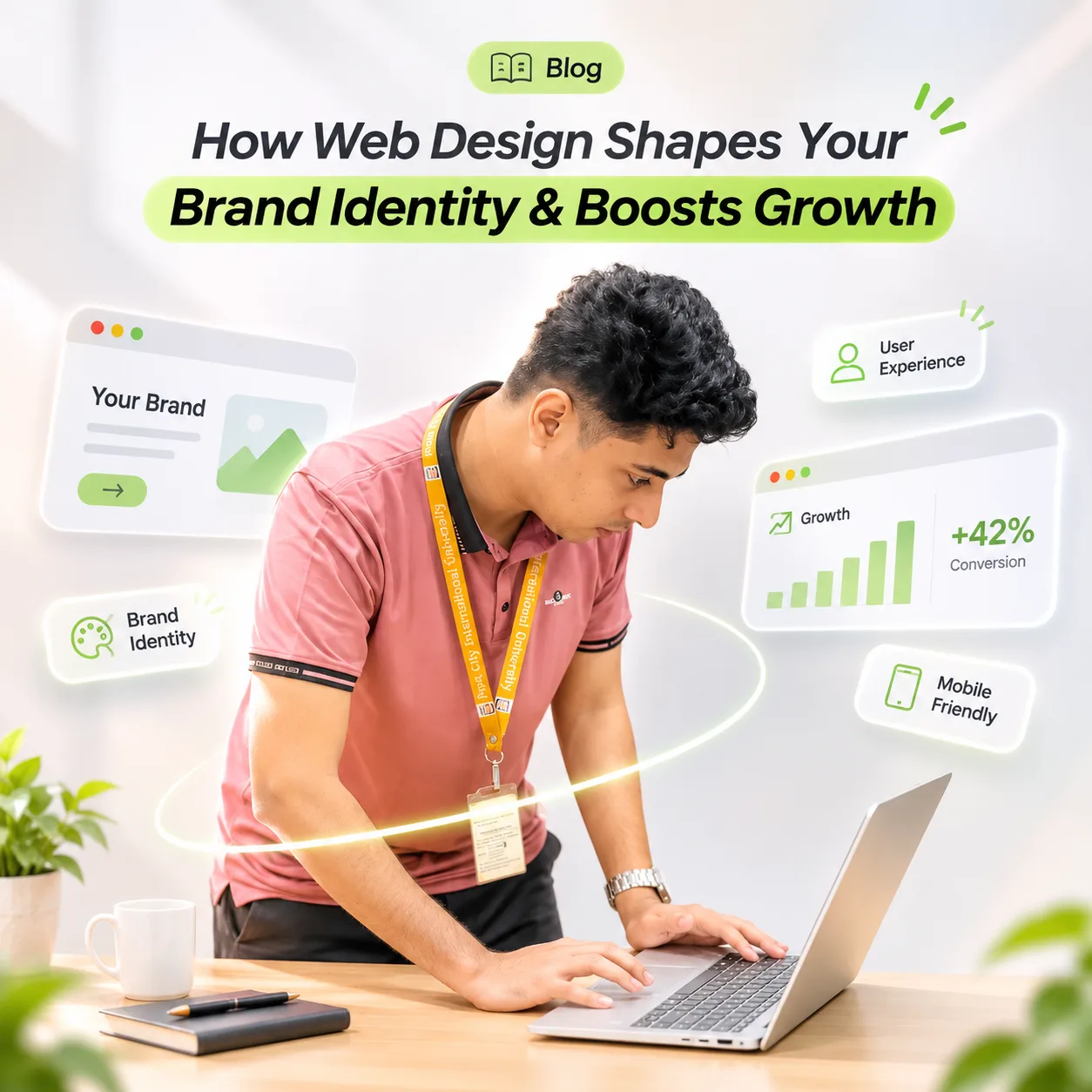
Your website is introducing your business to someone right now.
Maybe they found you on Google or through a friend. In seconds, they’re deciding: Can I trust this? Should I stay?
Web design isn’t just colors and sections. It’s your first impression—and the start of a relationship.
Your website is your brand, in action
A logo can make you recognizable. A beautiful Instagram feed can spark interest. But a website is where people actually experience your business: what you believe, how you speak, and how easy you make the next step.
Picture two cafes selling the same coffee. One website has a clear menu, real photos, opening hours, and an easy way to reserve a table. The other takes ages to load and hides the address three clicks away. Which cafe would you try?
Neither website changes the taste of the coffee. But one removes doubt.
That’s the connection between web design and brand identity. Your colors, images, words, and interactions should tell one story. A playful brand can feel energetic; a financial service may need to feel calm. Consistency helps visitors recognize who you are before they read your About page.
Good design earns trust before it asks for a sale
Most people don’t arrive ready to buy. They arrive with a question.
Can this company solve my problem? How much effort will this take? What happens after I click?
Thoughtful website UX design answers those questions quietly. Clear navigation says, “You’re in the right place.” Readable text says, “Your time matters.” Transparent pricing or process details say, “We have nothing to hide.” Real testimonials and relevant examples help people judge for themselves.
And a beautiful website with confusing buttons? That’s like welcoming someone into a stunning shop and refusing to tell them where the checkout is.
Trust grows through useful moments, not just polished visuals.
Growth happens when visitors know what to do next
Traffic feels exciting. But visitors who can’t find what they need won’t help your business grow.
Imagine a founder checking an agency’s work before reaching out. Instead, they meet floating animations, vague promises, and five competing buttons. Impressive? Maybe. Helpful? Not really.
Effective web design for business growth connects each page to a goal. Make your offer understandable. Show the proof that matters. Give people a natural next step—book a call, request a quote, explore your work, or simply ask a question.
Conversion-focused web design respects users. A good call to action helps, not pressures.
Small screens, big impressions
Your brand doesn’t exist only on a desktop monitor. People might find you on a commute or between classes.
A mobile-friendly website should work beautifully in those moments: fast-loading pages, readable content, touch-friendly buttons, and forms that don’t feel like homework. Accessibility matters too. Useful contrast, clear headings, keyboard support, and meaningful labels help more people participate.
And don’t forget discoverability. SEO-friendly web design uses organized content, descriptive page titles, sensible headings, and strong performance to help search engines and people understand your site. Design and SEO aren’t enemies. They work best together.
None of this demands endless visual effects. Sometimes removing one unnecessary step makes a bigger difference than adding ten animations.
Try the five-minute brand test
Open your website on your phone as if you’re a stranger.
Without explaining anything, ask yourself: Can I tell what this business offers in five seconds? Do the visuals feel like one brand? Can I find proof that it delivers? Is it obvious what to do next? Can I complete that action without getting frustrated?
Better yet, hand the phone to a friend and watch where they pause. Don’t coach them. Their hesitation is valuable feedback.
Students can try this on campus sites. Teachers can turn it into a classroom exercise. Creators and owners can use it to see what audiences experience before they message.
Aim for one honest improvement, not a perfect score.
Your website should feel like you—and work for your visitors
A memorable brand is more than a color palette. It’s the feeling people leave with after interacting with you.
Strong web design makes that feeling intentional. It connects identity with clarity, trust with usability, and attention with meaningful action. It can’t guarantee growth, but it can help earn it.
A Quick Note from the Author
I’m Junitule Islam Riad, Managing Director and Web & Product Designer. I spend my days collaborating with founders, creators, and ambitious teams to design human-first digital products. If you're exploring how to balance advanced tech architecture with clean, empathetic product design, I’d love to connect. You can also dive into design breakdowns and product tutorials over on my YouTube channel.
The future of technology isn't about replacing human judgment with machines. It’s about designing systems that elevate what humans can achieve together.
Let’s talk! What is the most frustrating AI interface experience you've encountered lately, and how would you fix it? Drop a comment below. I read and reply to every single message.
By Junitule Islam Riad — Managing Director & Web & Product Designer.
Watch on YouTube